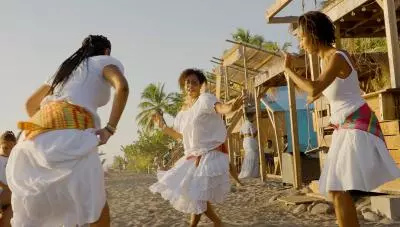
Bèlè is an artistic practice that combines dance, rhythm, song and drumming. It's a traditional Martinican art form that has its roots in the dances and songs brought to Martinique by slaves. A true cultural expression used both as a means of resistance and a celebration of life. An ancestral and civilizational heritage of African culture and worship still present in Martinique.
In Martinique, bèlè evolved on sugar plantations and in rural communities as part of rituals linked to daily life or religious festivals. It then evolved in contact with European culture in the context of slavery, where it was forbidden to play.
It was then a way of giving rhythm to rural life. The songs, drums and dances of the bèlè were used to recount the history of the island or disputes between settlers. It's a way for the Martiniquais to talk about work, to tell the story, to talk about everyday life, but also about their social struggles. The bèlè song is an oral performance that holds society and the community together.
The word "bèlè" comes from "Bel air" in French, or the art of behaving well.
Among the emblematic artists bearing this Martinican musical tradition are Ti-Raoul and his Grivallier brothers, Ti-Emile, Sully Cally, or Eugene Mona and the Rastocle brothers.